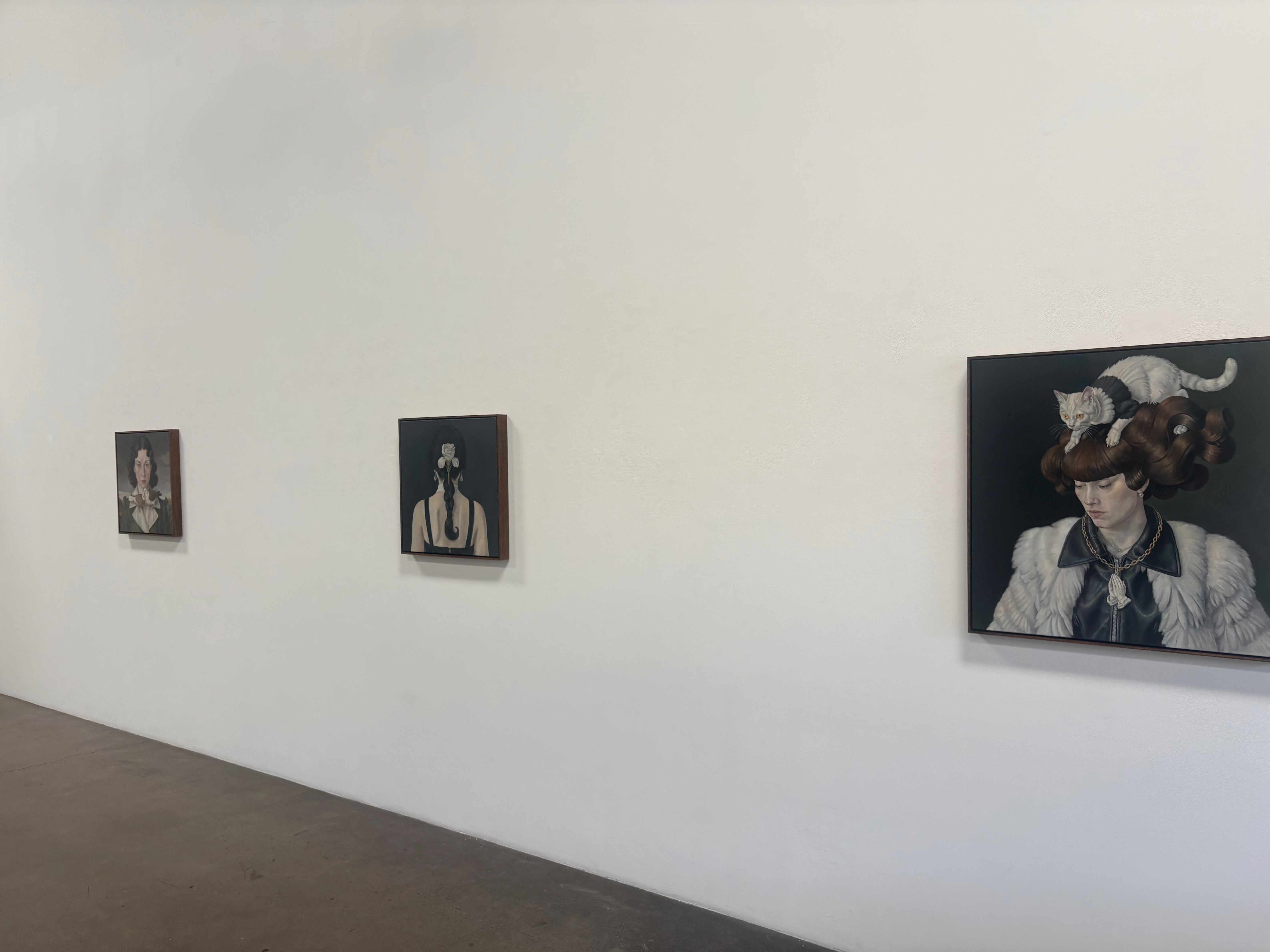
On familiars, grisaille, selection, and what oil does that a file cannot. Recorded on the occasion of Familiars at Richard Heller Gallery, Santa Monica. September 2026.
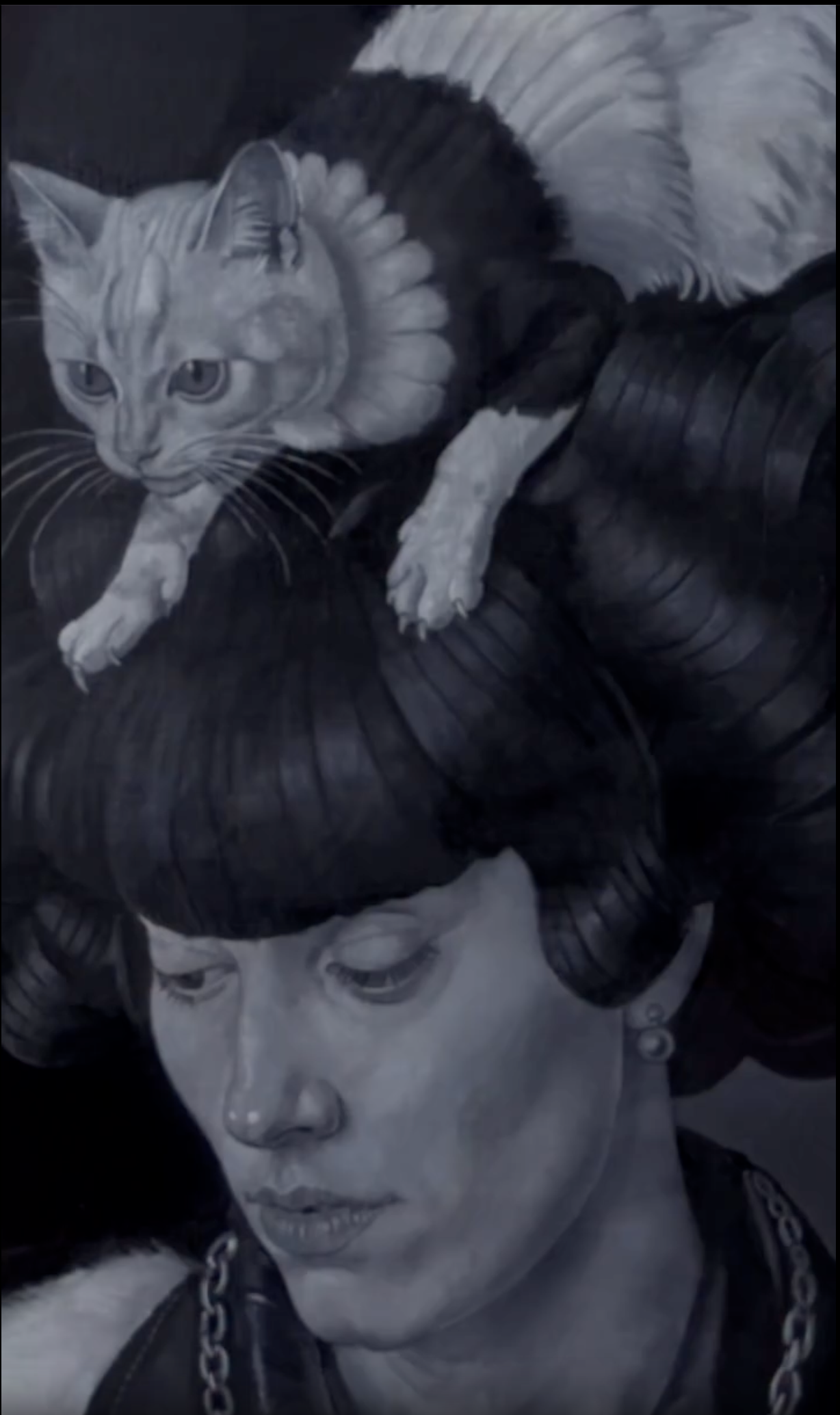
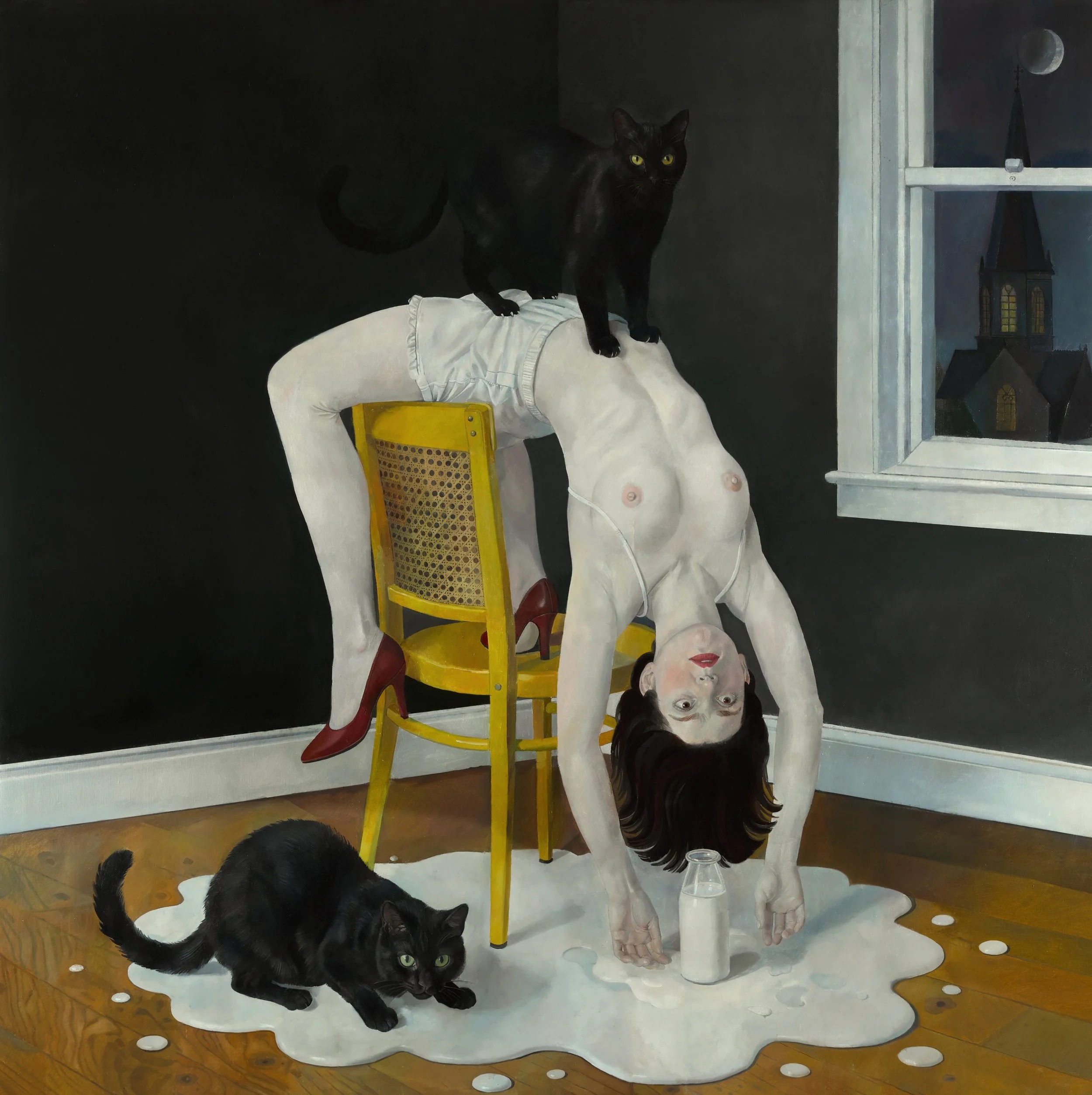
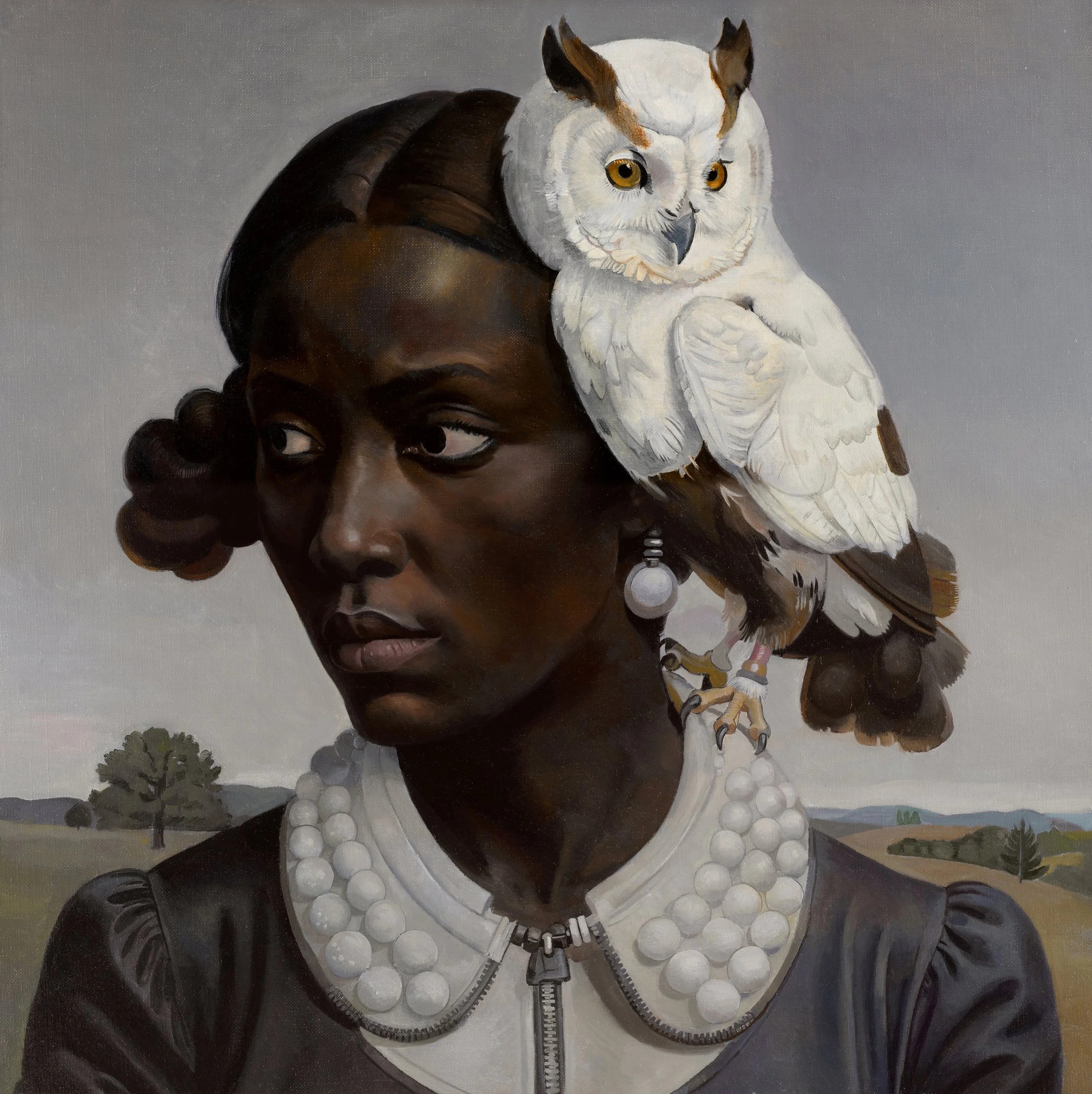
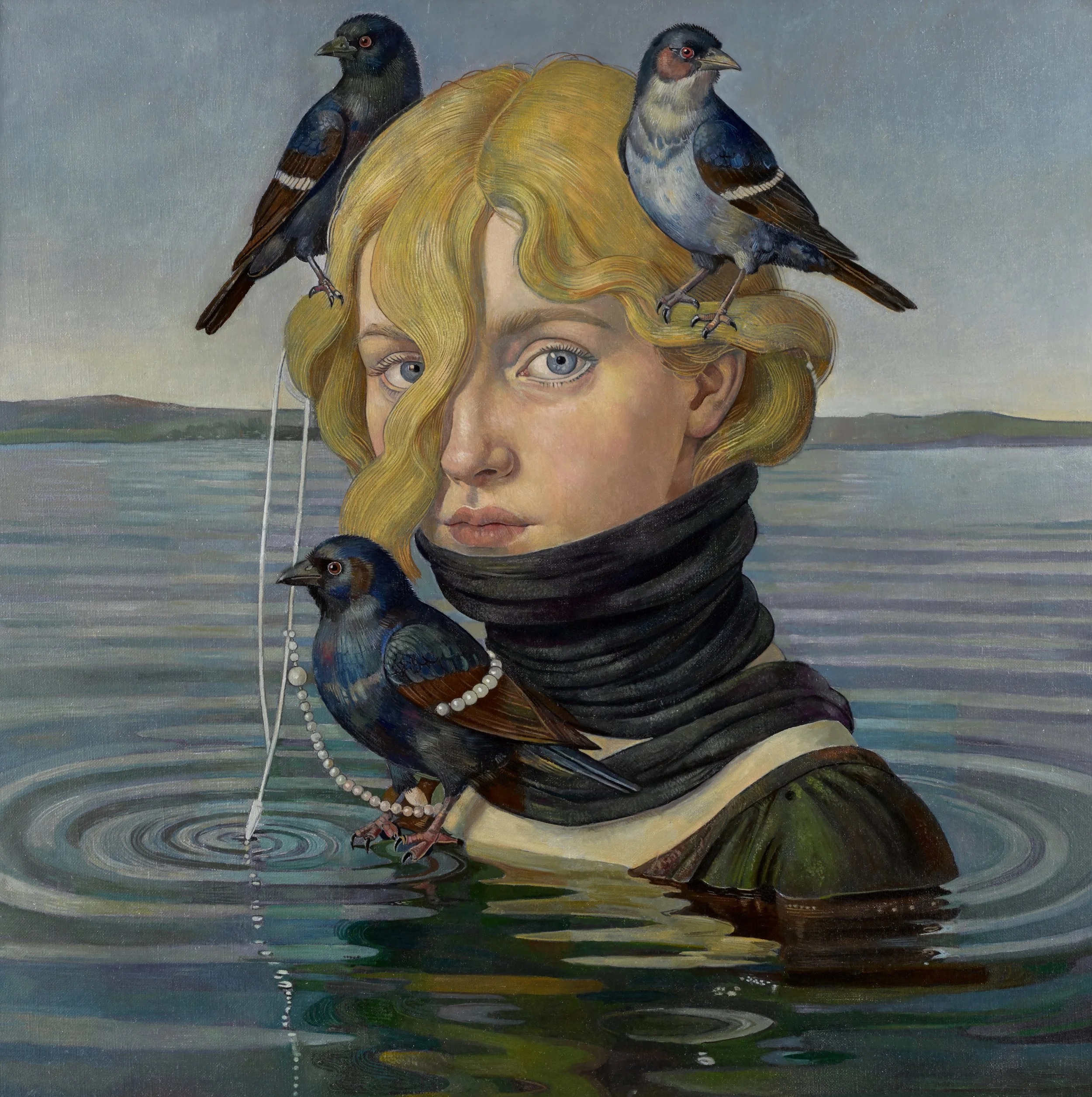
The familiar is the animal that is not a pet. In my work, animals have never been decorative. They are psychological doubles. They are the part of the self that watches. The familiar is the witness who cannot speak but knows everything.
The title comes from that tradition, early modern European folklore, the idea that certain beings exist in parallel with humans and serve them without serving them. My familiars are cats mostly, some birds. They occupy the same architectural space as the women they accompany but they inhabit a different ontological register. The woman is sovereign; the animal is spectral. Neither dominates the composition. They coexist in suspended equality.
That's the familiar: the presence that confirms you are not alone while offering no comfort whatsoever.
Oracle was about authority. The woman as priestess, as oracle, as figure who speaks truth to power or embodies it. The animals in Oracle were often subordinate, symbolic, positioned around the human like attributes of a saint.
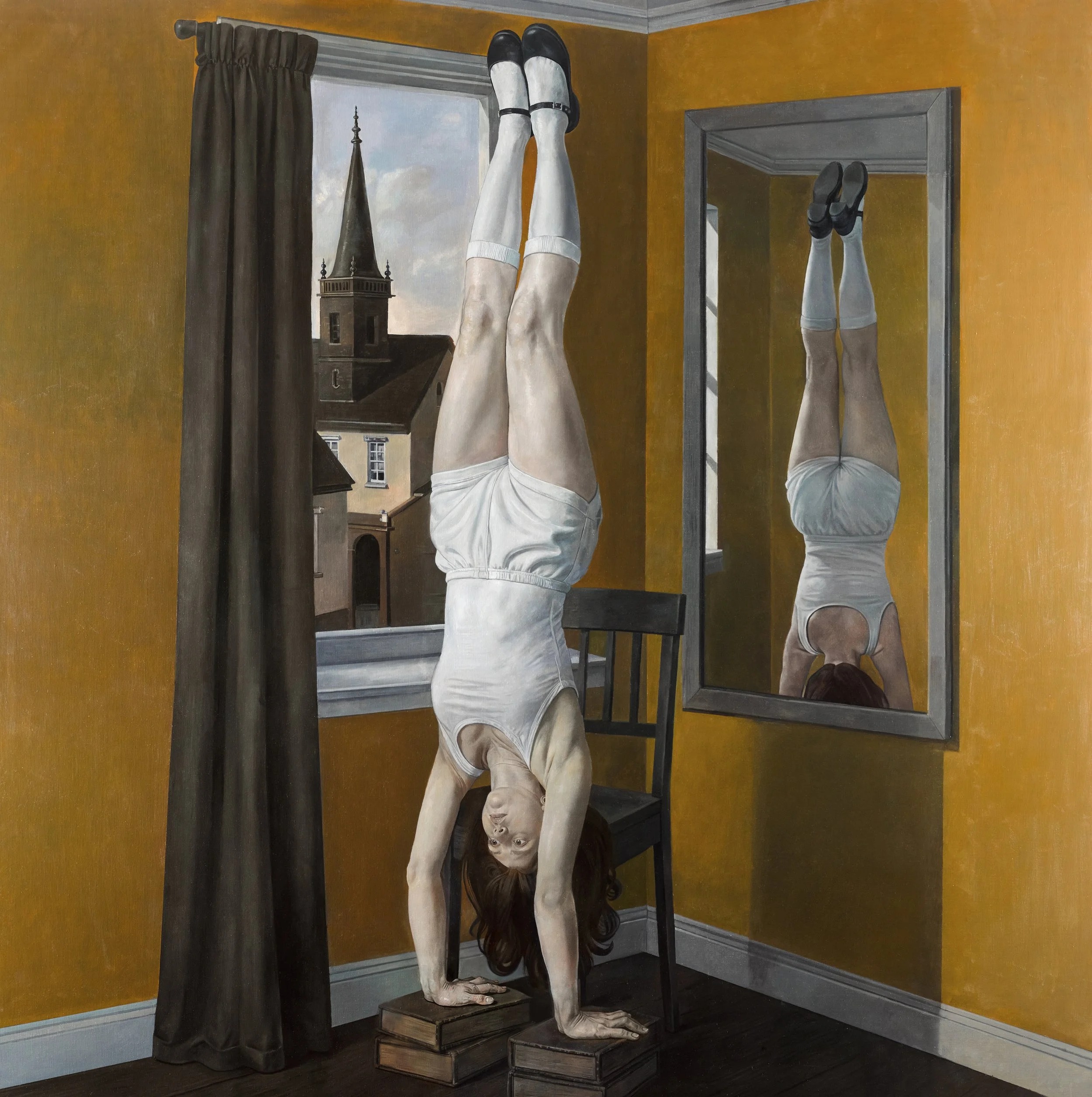
What I didn't finish, or what Familiars corrects, is the power imbalance itself. In Oracle, the hierarchy was still vertical: human above, animal below, even when the animal was psychologically essential. Familiars flattens that geometry. The cat is not beneath the woman; the cat is beside her, at eye level or near it, occupying the same gravitational field. They are not mistress and familiar in the old hierarchical sense. They are two sovereignties sharing a room.
I also didn't finish the question of domesticity itself. Oracle was public, ceremonial, sacerdotal. Familiars returns to the interior: chairs, mirrors, doorways, the architecture of private life. The power I'm exploring now is not the power of the oracle but the power of the woman who requires no audience. That is, if anything, more political.
Because a painting has a temporal dimension that the canvas cannot release. I generate images. I select the outlier, the one that hums with that uncanny intensity. But the rejected images are not waste. They are the painting's ghost life, its alternate selves, the family tree from which the final work was the sole survivor.
The film shows the kinship. It lets the viewer see that the finished painting is not a singular miracle but the survivor of a process. That it could have been otherwise, that the otherwise still haunts it. The film is the painting's unconscious made visible.
It goes something like this:
Prompt stage. Hours, sometimes days. The silhouette, the colour temperature of an interior, the psychological spacing. But I don't name them. I describe light, atmosphere, position, emotional register. I generate. I regenerate. I iterate.
Generation. Variants. ComfyUI, many checkpoints, my RTX 4090 working through the night sometimes. This is the high-frequency phase. Volume creates distance. I cannot select wisely from ten images. I become less attached to any single outcome because there are always more coming.
Selection. This is where the art happens, aside from the training of the LoRAs of course. Not in the prompt, not in the generation, but in the moment of recognition. I'm looking for the outlier, the image that resists easy categorization, that carries a charge the others don't. I don't know why it charges me. I've learned to trust that I don't need to know. I select perhaps one in two hundred. Maybe fewer.
Transfer to panel or canvas. I grid it, transfer it, or work freehand from the screen beside me. Then: grisaille. Monochrome underpainting in shades of grey, establishing value structure, modelling form before colour enters. This is pure fifteenth century. Van Eyck, Memling, the Northern tradition that built the image from darkness upward. The grisaille locks the composition. It proves I understand the tonal anatomy of what I've selected. If the grisaille works, the painting will work. If it doesn't, no amount of colour will save it.
Colour layers. Oil paint, traditional mediums. Glazes, scumbles, impasto in selective areas. The AI image is reference now, not master. I depart from it constantly: correcting a hand that the machine rendered vaguely, adjusting a gaze that lacks intensity, introducing a colour discordance that the prompt never specified but that the painting demands.
Varnish. Final unity. The surface becomes a single plane. The digital origin disappears into the physical fact of paint on surface.
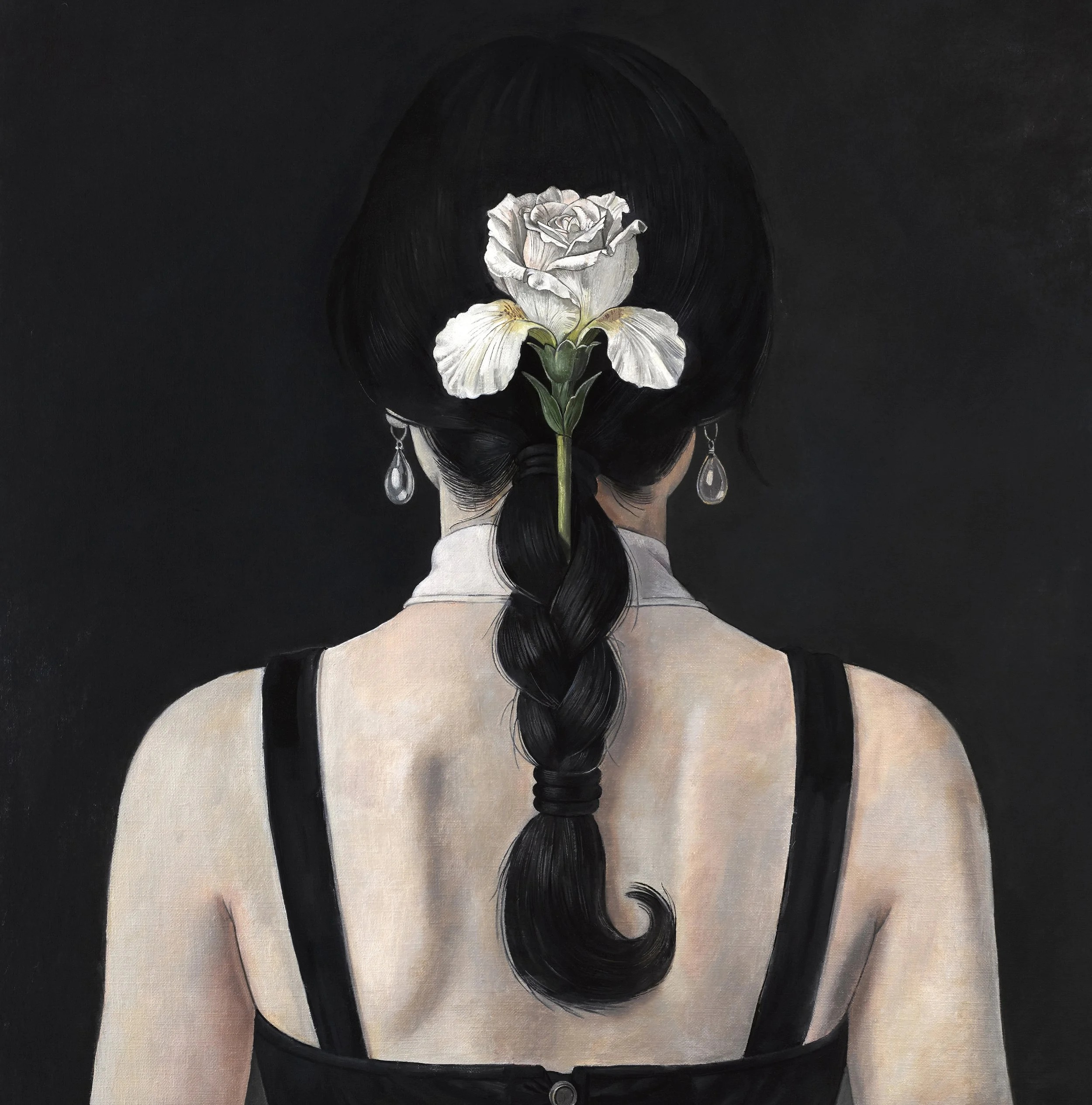
Time made visible. A print is instantaneous. The entire image arrives at once, every edge equally sharp, every decision presented simultaneously. An oil painting is sequential. You can see, if you know how to look, the order of decisions. The underdrawing shows through in places. The grisaille breathes beneath the colour. A glaze sits on top of a scumble that sits on top of a ground that took three days to dry. The painting contains its own archaeology.
Oil also does something physically that no ink can. It holds light inside the surface rather than reflecting it off the surface. The refractive index of dried oil medium creates luminosity that comes from within the painted layer. A print is epidermal. A painting is subcutaneous. The light enters, bounces around between pigment particles suspended in binder, and returns to your eye having accumulated information along the way. That is not mysticism. That is optics.
But beyond physics: the oil is where the weight of decision lives, the ritual of re-embodiment. Every brushstroke is a commitment that can be undone but only with evidence of the undoing. The file is infinitely revisable with no scars. The painting remembers every correction. That memory is visible to anyone who looks closely enough, and it is the record of a human mind engaging with an image over time. That record is the work, as much as the image itself.
Selection. Always selection.
The prompt is collaborative with the model. The generation is mechanical; the machine is doing what I trained it to do (with my LoRAs). The transfer is craft. The painting is craft elevated by judgement. But the selection, the moment of recognising the outlier among hundreds, that is where my “authorship” concentrates.
The decision to select IS the artistic act. Everything else is preparation for that decision or elaboration after it. The selection is where my aesthetic vocabulary, built up over years of looking at art, of training LoRAs on my own previous work, of developing a personal sense of what resonates, where all of that compresses into a single instant of recognition: this one. So the selection is also a self-encounter. I am discovering my own taste in real time, with every iteration.
Neither. It changes the question.
When I was manually compositing Caspar David Friedrich into Géricault's raft, I was proving a point about visual culture as a recombinant system: that meaning is made at the intersection of existing images, not ex nihilo. That was a conceptual position. It required technical labour to demonstrate, and the labour was part of the argument: look how much work it takes to make visible what should be obvious.
Now the machine does the labour in seconds. Does that mean the point is obvious to everyone? No. The point was never about the difficulty. The difficulty was just proof of seriousness. What the machine vindicates is the premise: that image culture is inherently recombinant, that originality lives in selection and recontextualisation, not in the myth of the blank canvas.
What the machine makes redundant is not me but the defence of my practice. I no longer have to argue that remixing is legitimate. The world has accepted that premise so thoroughly that children do it on their phones. My role shifts from advocate to practitioner. I get to stop proving the point and start making the work.
If anything, the machine freed me. The project that used to take me weeks in Photoshop now takes seconds, which means I can spend those weeks on the parts the machine cannot do: the selection, the painting, the development of a personal visual language that survives the automation. The machine levelled the floor. Now we see who can dance.
Comfortable isn't the word. It's complicated, and I've never pretended otherwise. But here is where I differ from the tech companies' narrative: I have never claimed that AI replaces artists. I have never said that training on others' work is ethically neutral. I have simply said that my practice, generation, selection, translation into oil, produces work that I stand behind as genuinely mine. Those two positions are not the same.
Am I comfortable being Exhibit A? No, not entirely. But someone has to occupy this position honestly. Not as a corporate shill, not as an accelerationist ideologue, but as a working artist who found something in these tools that matters, and who is willing to be questioned about it in public without retreating into either defensiveness or apology. That position is uncomfortable. It should be.
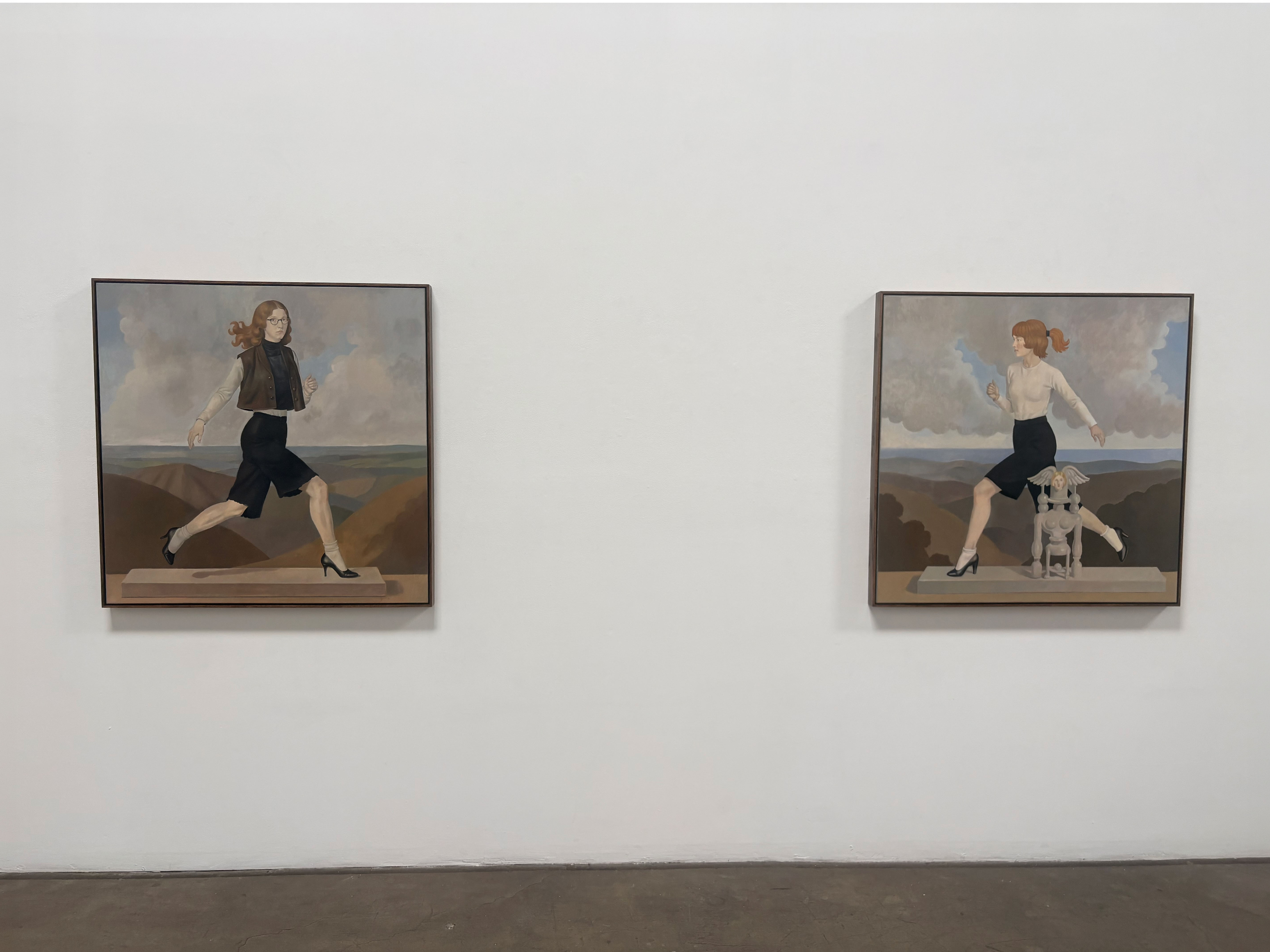
They should look long enough to start wondering what happened just before this moment and what will happen just after. They won't find out. That's the point. The painting suspends time, that T.S. Eliot “still point” I've referenced, and asks the viewer to stay suspended with it.
If they do that for even thirty seconds, the twenty minutes they had won't matter. They will have encountered something. The rest is just walking around.