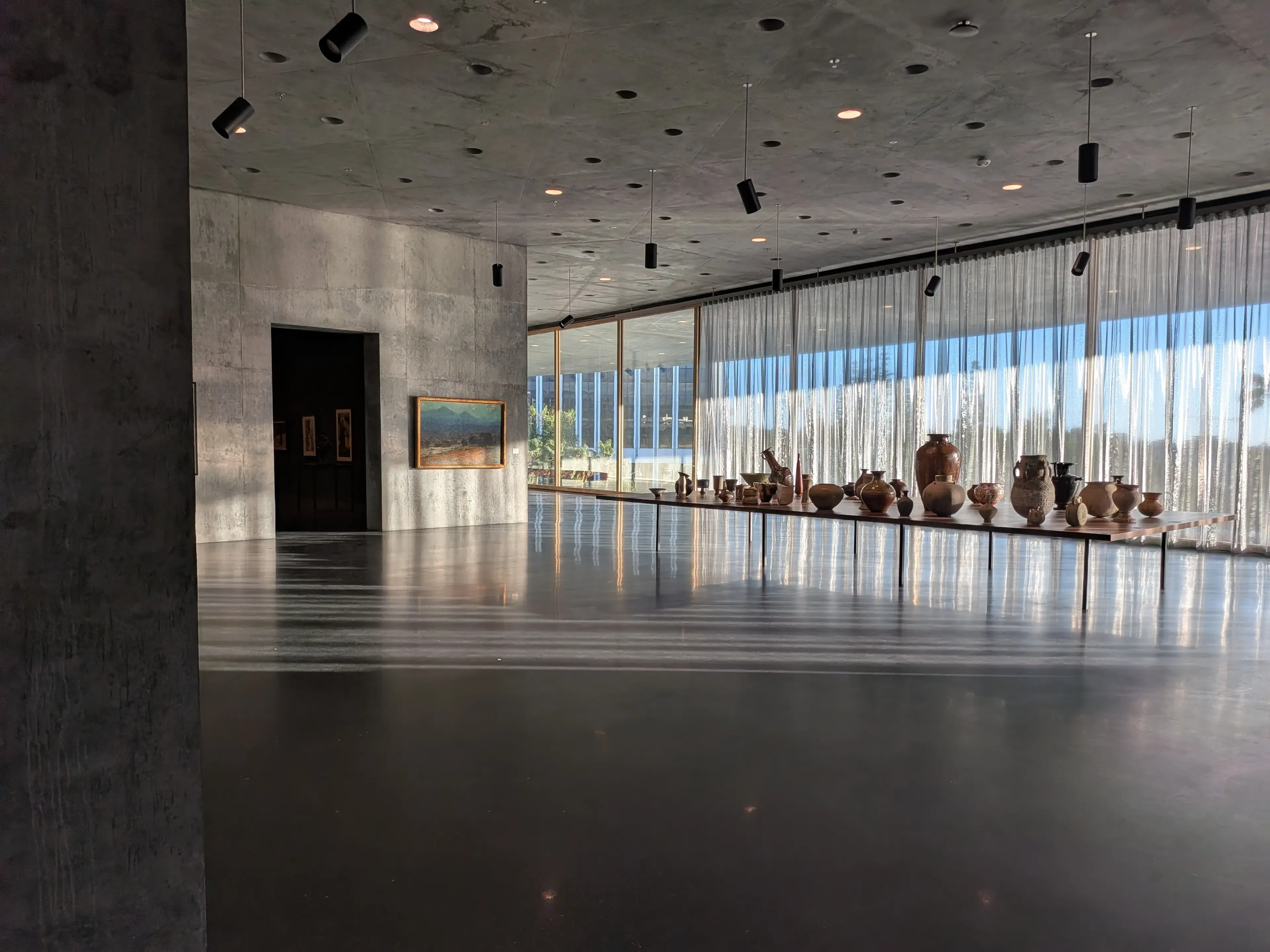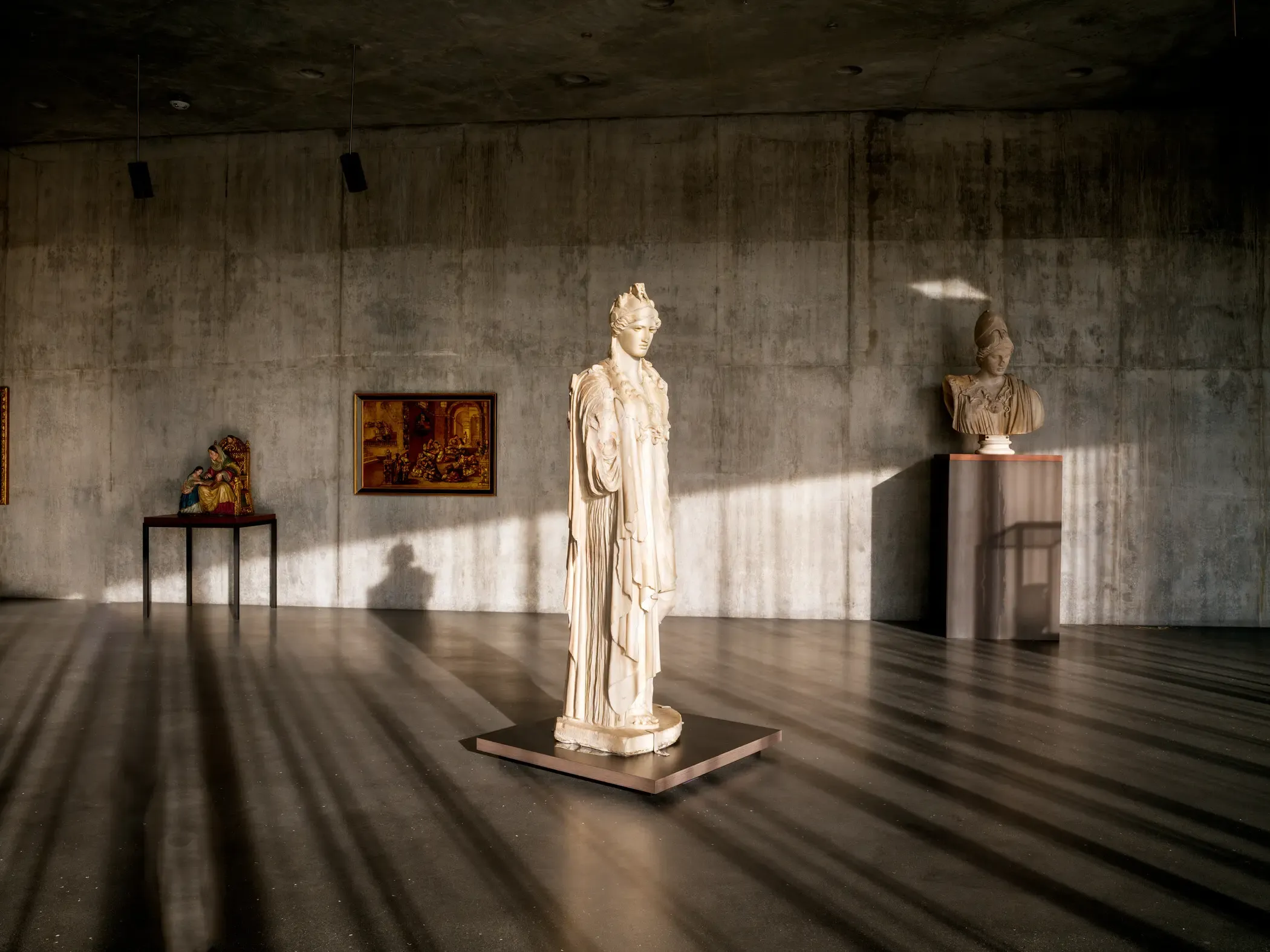
LACMA's David Geffen Galleries opened to the public on April 19, 2026 with an inaugural installation that rethinks how a museum tells the history of art. Rather than organizing the collection by medium, period, or region, forty-five curators working across every area of the museum built the display around bodies of water — the Atlantic, Mediterranean, Indian, and Pacific — using them as a framework for the exchange, migration, and commerce that have shaped art for millennia.
The result is a nonhierarchical layout of more than eighty presentations spread across a single elevated floor with no front or back. Visitors entering from the north or south first encounter art and objects from the Ancient Americas, situating the museum in its own region, before moving freely between terrace galleries, courtyard galleries, and intimate interior rooms. Familiar works appear in unfamiliar company: a 17th-century Dutch painting beside 20th-century photography, African textiles near American quilts.
Alongside the collection are commissions made for the building. Todd Gray's Octavia's Gaze is a three-dimensional photographic assemblage that questions art-historical hierarchies; Lauren Halsey contributes a reclining sphinx and a wall relief drawing on Egyptian forms and South Los Angeles imagery; Do Ho Suh's Jagyeong Hall, Gyeongbok Palace re-creates Joseon-dynasty architecture in translucent wire and nylon that appears to pass through a concrete wall. Outside, Mariana Castillo Deball's Feathered Changes paves 220,000 square feet of plaza with animal tracks and Mesoamerican imagery, and Reiko Sudō's sputter-plated chrome curtains filter the light along the building's glass perimeter.