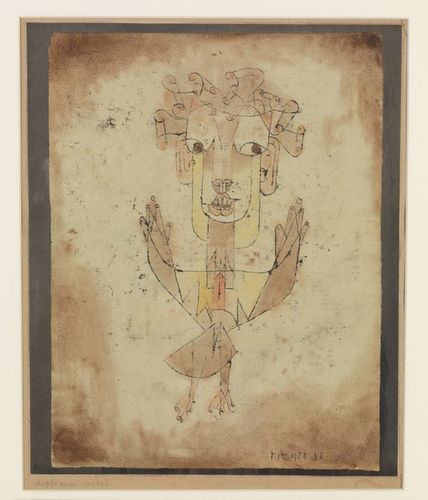
Paul Klee (1879–1940), born in Münchenbuchsee near Bern, Switzerland, was a painter, draftsman and teacher and one of the most important artists of the twentieth century. The son of a music teacher and a singer, he long hesitated between music and painting before studying art in Munich. From 1911 he was close to the artists of the Blue Rider, and a 1914 trip to Tunisia with August Macke and Louis Moilliet proved decisive; he wrote in his diary, "I am a painter." In 1920 Walter Gropius appointed him to the Bauhaus, where he taught from 1921 to 1931, and in 1924 he founded the Blue Four with Kandinsky, Feininger and Jawlensky. His inventive, often small-scale works blend abstraction, color theory, line and poetic fantasy. Dismissed from the Düsseldorf Academy by the National Socialists in 1933, he returned to Bern, where he died after a long illness, leaving thousands of paintings, watercolors and drawings.
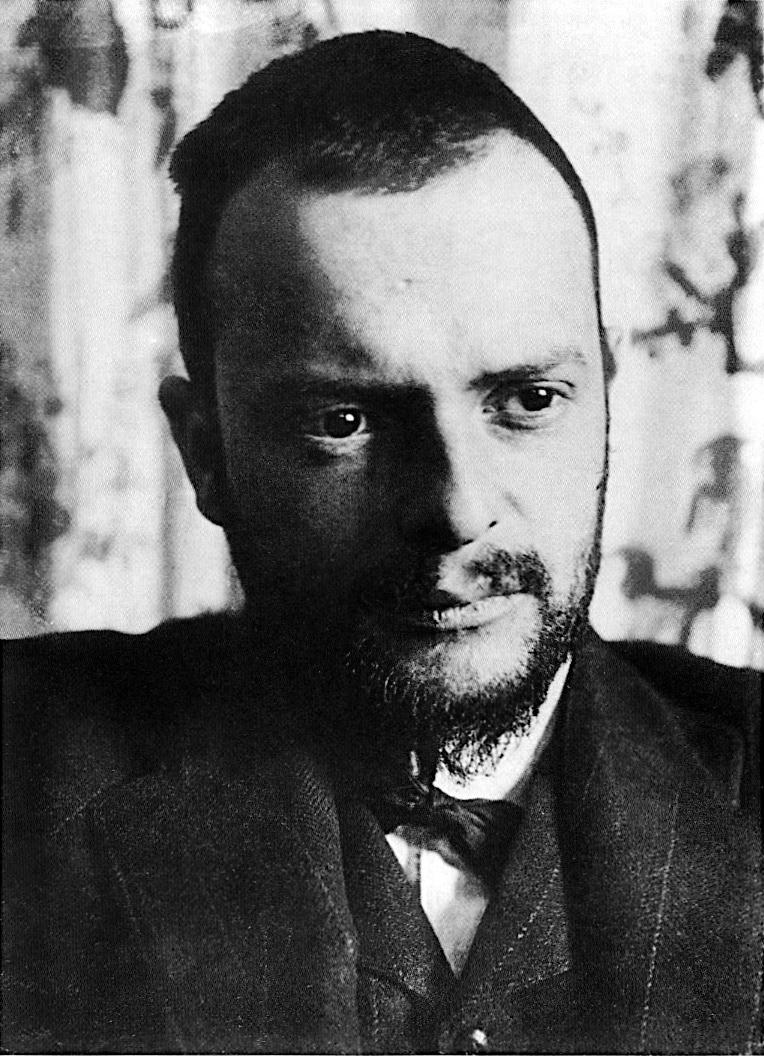
Paul Klee. Photo by Alexander Eliasberg, 1911, public domain, via Wikimedia Commons
The Jewish Museum · 2026