Georges Braque (1882–1963), born in Argenteuil-sur-Seine, France, grew up in Le Havre, where he took evening classes at the École des Beaux-Arts, and trained as a decorator before painting at the Académie Humbert in Paris. By 1906 he had joined the Fauves, and his first solo show was held at Daniel-Henry Kahnweiler's gallery in 1908. From 1909 he worked closely with Pablo Picasso to develop Cubism, and in 1912 the two began experimenting with papier collé, or pasted paper. Their collaboration lasted until 1914, when Braque served in the French army and was wounded. His later work became freer, and he designed sets for Sergei Diaghilev's ballets in the 1920s. He had his first major retrospective at the Kunsthalle Basel in 1933 and won first prize at the 1937 Carnegie International. From the late 1940s he returned to recurring themes such as birds, studios, landscapes and seascapes.
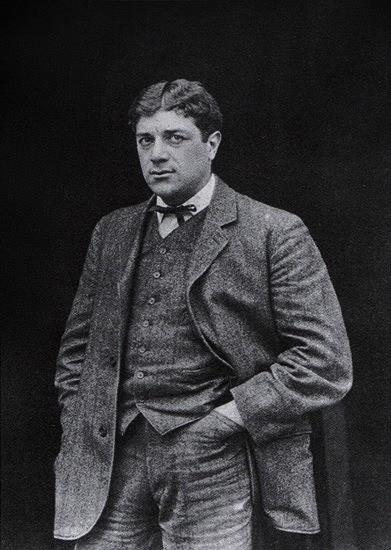
Georges Braque. Photo by Unidentified photographer, 1908, public domain, via Wikimedia Commons
